Budget Living Room Makeover Ideas Under $200: A Weekend Plan That Actually Works
Some links in our guides may earn us a commission at no extra cost to you — here's why we only recommend what we'd buy.
Jump to a section
- What Is the Cheapest Way to Makeover a Living Room?
- The $200 Budget Breakdown
- Step 1: The Free Reset (Friday Evening)
- Step 2: Paint One Thing (Saturday Morning)
- Step 3: Cheap Living Room Refresh Ideas That Look Expensive
- The 5 Mistakes That Waste a Budget Makeover
- Your Weekend Timeline
- Final Thought
If your living room feels tired but your bank account says "not right now," this guide is for you. These budget living room makeover ideas under $200 follow one simple rule: spend only where the change is visible. With a smart plan, one free weekend, and a little thrift-store luck, you can make your main living space feel genuinely new — without touching your savings.
What Is the Cheapest Way to Makeover a Living Room?
The cheapest living room makeover costs almost nothing: rearrange the furniture, deep-clean everything, and remove about a third of the decor. Before you spend a single dollar, do the free reset. Pull the sofa away from the wall and try floating it, angle the armchair toward the window, and declutter every surface until only things you actually like remain. Many people find their room already looks better at this point — and now you know exactly what is missing, so you only buy what fills a real gap.
Tip: take a "before" photo on your phone. You will forget how much changed, and the photo keeps you from second-guessing your choices mid-weekend.
The $200 Budget Breakdown
Two hundred dollars disappears fast if you spend it randomly. Here is a breakdown that keeps the money where the impact is:
- Paint (one accent wall or the whole room): ~$40–$60. Nothing transforms a room faster per dollar. A warm cream, soft sage, or deep terracotta accent wall changes the entire mood.
- Textiles (throw pillows, a throw, maybe a rug): ~$50–$70. New cushion covers — not new pillows — cost very little and read as "new couch." A 5x7 rug from a discount store anchors the seating area.
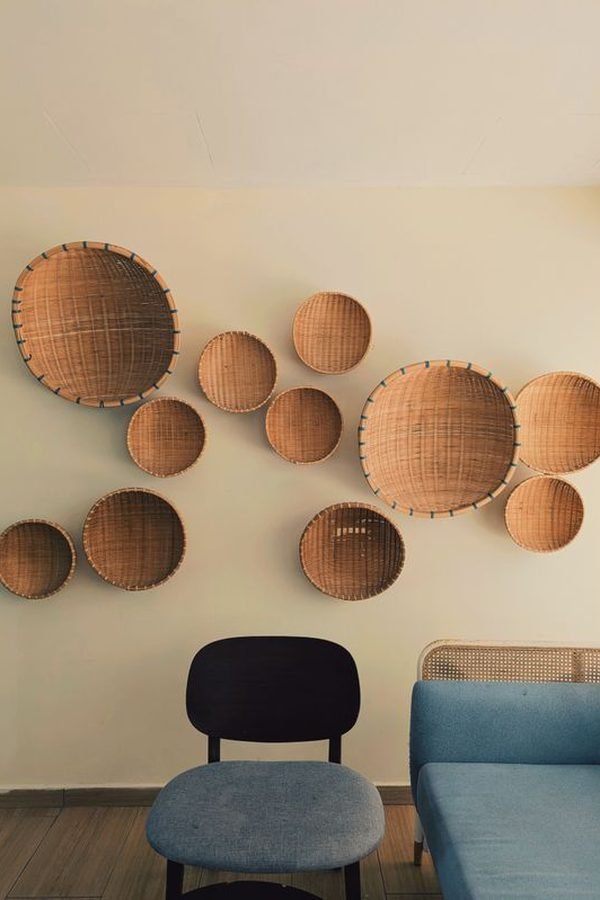
- Thrift-store finds (frames, baskets, a side table): ~$30–$50. Wood frames, woven baskets, and small tables are thrift-store gold. A $4 frame with a free printable inside looks like a $40 piece.
- Lighting (one warm lamp or string lights): ~$20–$30. If your room relies on a single overhead light, one floor lamp with a warm bulb changes evenings completely.
- Greenery (one real plant or a good faux one): ~$10–$20. Plants add life that no decor item can fake. A snake plant survives almost anything.
Step 1: The Free Reset (Friday Evening)
Move every piece of furniture out of its usual spot — or at least far enough to clean behind it. Vacuum under the sofa, wash the curtains, wipe the baseboards, and wash the windows inside and out. Clean windows alone make a room noticeably brighter. Then put furniture back, but try one new arrangement. The classic move: pull the sofa 15–20 cm off the wall and angle the seating toward the room's focal point instead of the TV. It costs nothing and often makes the room feel larger.
Step 2: Paint One Thing (Saturday Morning)
You do not need to paint the whole room. One accent wall behind the sofa, the inside of a bookshelf, or even just the front door of the room creates a focal point that makes everything else look intentional. Sample pots (often under $10) can cover a small feature area if your room is tiny. Prep matters more than the paint brand: tape the edges, fill nail holes, and do two thin coats instead of one thick one.
Step 3: Cheap Living Room Refresh Ideas That Look Expensive
Now spend the textile and thrift money. These are the cheap living room refresh ideas that give the biggest visual return:
- Swap cushion covers, not cushions. Two or three covers in one color family — say, rust, cream, and sage — make an old sofa look styled.
- Hang curtains high and wide. Mount the rod near the ceiling and extend it past the window frame. The same curtains suddenly make the window look twice as big. Dollar-store curtain rods do this job fine.
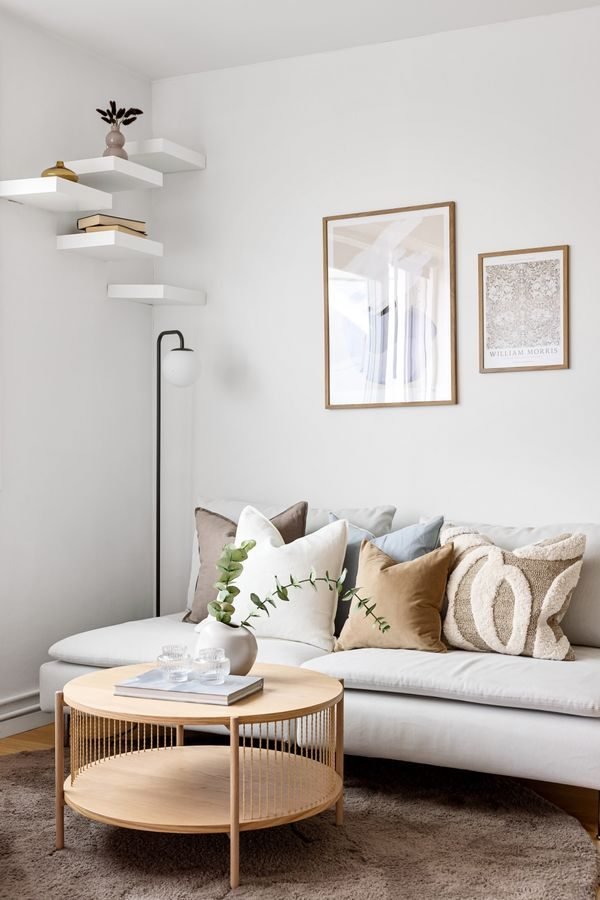
- Create a gallery corner. Thrifted frames in mismatched wood tones, filled with free printables or your own photos, fill an empty wall for under $15.
- Add one warm light source. A floor lamp in a dark corner, or a small table lamp on a side table, with a warm-white bulb (2700K). Overhead-only lighting is the main reason budget rooms feel flat.
- Style the coffee table in threes. A stack of books, a small plant, and one decorative object (a candle, a thrifted bowl). Groups of three look curated; random singles look like clutter.
The 5 Mistakes That Waste a Budget Makeover
A tight budget punishes sloppy decisions. Avoid these:
- Buying before planning. Walk through with a list. Impulse decor is how $200 becomes $400 with nothing to show for it.
- Painting the whole room a bold color on a whim. Bold is fine on one wall. Four walls of it can make a small room feel smaller — and repainting costs money.
- Ignoring lighting. People spend on pillows and ignore the harsh overhead bulb. Light is half the atmosphere.
- Too many small things. Ten tiny thrift finds look like clutter. One larger piece (a big basket, a tall plant) has more presence than a shelf of knick-knacks.
- Matching everything. A room where every item came from one store on one day looks flat. Mix wood tones, textures, and eras — it is cheaper and looks richer.
Your Weekend Timeline
Friday evening (2 hours): free reset — rearrange, deep clean, declutter. Make a shopping list of real gaps.
Saturday morning (3–4 hours): paint the accent wall or feature area. While coats dry, thrift-store run for frames, baskets, and textiles.
Saturday afternoon (2–3 hours): hang curtains high and wide, swap cushion covers, hang the gallery corner, place the lamp and plant.
Sunday (1 hour): style surfaces in groups of three, take after photos, and put every leftover dollar back in your pocket. Done.
Tip: shop your own home first. The bookshelf from the bedroom, the lamp from the office, the throw from the guest room — moving things between rooms is free redecorating.
Final Thought
A living room makeover on a budget is not about finding the cheapest version of expensive things. It is about spending where the eye goes: walls, textiles, light, and one living thing. Do the free reset, paint one thing, fix the lighting, and style what you have — most $200 makeovers succeed or fail on exactly those four moves.