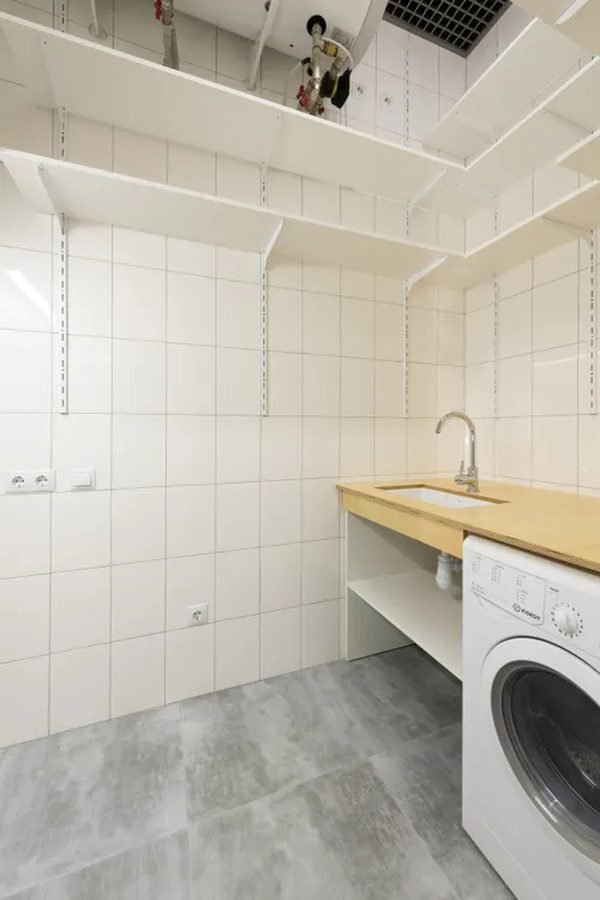
Small Kitchen Organization Ideas on a Budget: 24 Fixes for Tiny Kitchens
Some links in our guides may earn us a commission at no extra cost to you — here's why we only recommend what we'd buy.
Jump to a section
- Start Here: The Honest Purge
- How to Organize a Small Kitchen With No Pantry
- Step 1: Clear the Counters (The 80/20 Rule)
- Step 2: Zone Your Cabinets
- DIY Kitchen Organization Ideas From the Dollar Store
- Kitchen Countertop Organization Ideas That Keep Counters Clear
- What Not to Do in a Small Kitchen
- The Maintenance Minute
Small kitchens are not disorganized because their owners are messy — they are disorganized because every centimeter has to work twice as hard. These small kitchen organization ideas on a budget focus on systems, not spending: how to zone tiny cabinets, what to do with no pantry, and which dollar-store fixes genuinely earn their place. No renovation required, and almost everything here is renter-friendly.
Start Here: The Honest Purge
Before organizing anything, pull everything out of one cabinet at a time and be ruthless. The chipped mugs, the third spatula, the novelty gadgets, the expired spices — a small kitchen cannot afford passengers. A useful test: if you have not used it in the past year and it has no sentimental value, donate it. Most tiny kitchens gain the equivalent of a whole cabinet just from this step, for free.
How to Organize a Small Kitchen With No Pantry
No pantry is the most common small-kitchen complaint, and it is solvable. The trick is to build a "pantry zone" wherever you have vertical space:
- Dedicate one cabinet as the pantry. Group all dry goods there — not scattered across three cabinets. Add a tiered shelf insert (often under $10) so cans and jars stack in visible rows instead of hiding behind each other.
- Use the inside of cabinet doors. Adhesive or over-the-door racks on the inside of a cabinet door hold spice packets, wraps, and small bottles — dead space turned into storage.
- A rolling cart becomes a pantry. A slim rolling cart tucked beside the fridge or in a gap holds dry goods, oils, and snacks, and rolls out when you cook. This is the closest thing to a pantry you can buy for very little.
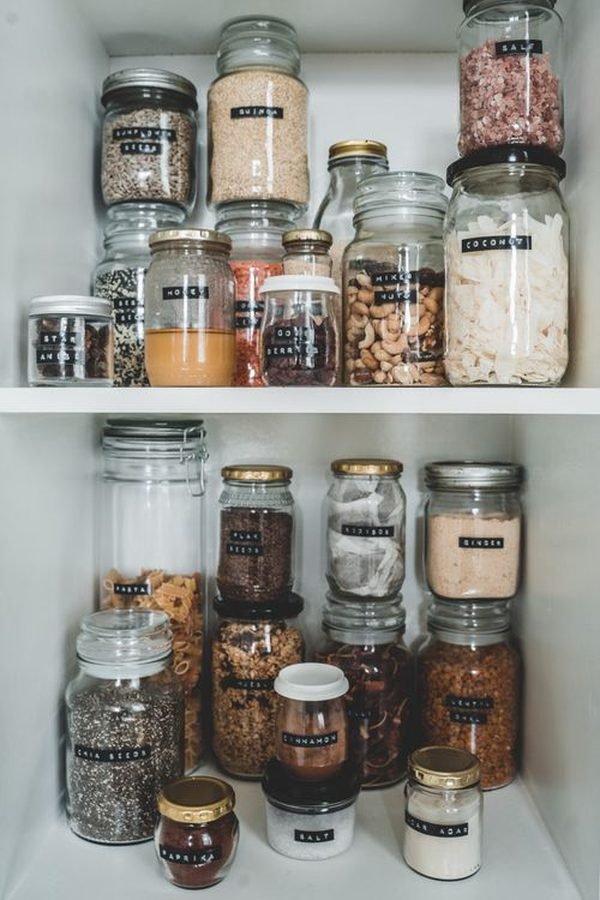
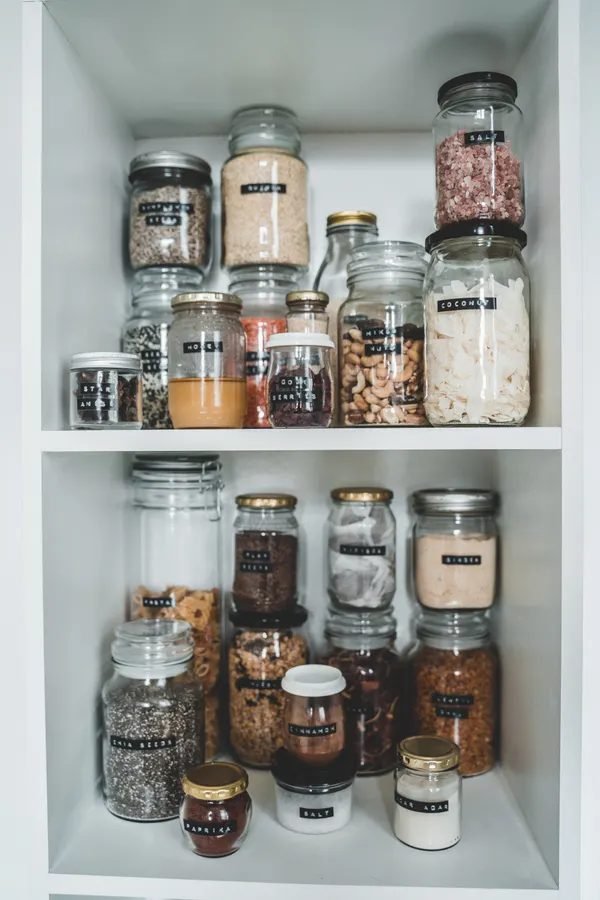
- Decant the bulky stuff. Flour, rice, pasta, and cereal take up less space — and stay fresher — in uniform square containers than in half-empty bags and boxes. You do not need a matching designer set; any airtight containers in the same shape stack neatly.
Tip: store food by meal zone, not by type. Keep breakfast things together, baking things together, cooking oils and spices near the stove. You open fewer cabinets per meal.
Step 1: Clear the Counters (The 80/20 Rule)
Counter space is the scarcest resource in a small kitchen, so protect it. The rule: only appliances you use at least weekly earn counter space. For most people that means the coffee maker and maybe the kettle — the toaster, blender, and stand mixer can live in a cabinet or on a shelf and come out when needed. Corral what remains (soap, sponge, oil bottle) on a single tray so it reads as one intentional group instead of scattered clutter. Wipe the counters completely clear once, then only put back what earned its spot.
Step 2: Zone Your Cabinets
Stop storing things by size and start storing by use. Divide your kitchen into stations:
- Cooking zone (near the stove): oils, spices, cooking utensils, pots and pans. Hang utensils on a wall rail or the side of a cabinet to free a drawer.
- Prep zone (the biggest counter stretch): cutting boards, knives, mixing bowls. Store cutting boards vertically in a file organizer — it takes a fraction of the space.
- Cleaning zone (under the sink): this cabinet is usually a mess. A tension rod across it creates a hanging tier for spray bottles; a small caddy holds the rest and lifts out for cleaning.
- Daily dishes (nearest the dishwasher or drying rack): plates, glasses, mugs you actually use. Move the rarely-used serving pieces to the highest, hardest-to-reach shelf.
DIY Kitchen Organization Ideas From the Dollar Store
You do not need a specialty organizing store. These cheap fixes do the real work:
- Tension rods — under the sink for spray bottles, inside a cabinet to divide baking sheets and cutting boards upright.
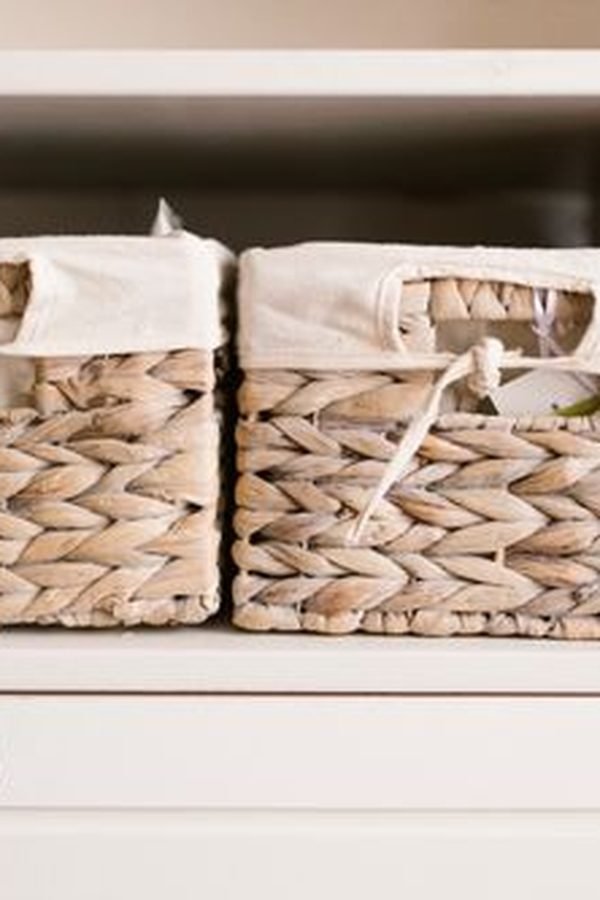
- Small bins and baskets — one per category in the pantry cabinet (snacks, baking, canned goods) so you pull out a bin instead of excavating.
- Adhesive hooks — inside cabinet doors for measuring cups, on the wall for oven mitts, under shelves for mugs.
- A magnetic strip — mounted on the wall for knives, freeing an entire drawer.
- Stackable shelf risers — instantly double the usable levels inside any cabinet.
- A lazy Susan — in a deep corner cabinet, so nothing gets lost in the back. One of the highest-value small purchases in any kitchen.
Kitchen Countertop Organization Ideas That Keep Counters Clear
Some things have to live on the counter. The goal is containment, not elimination: a utensil crock by the stove holds the five tools you reach for daily; a two-tier corner shelf lifts the coffee setup off the counter surface; a wall-mounted paper towel holder frees counter space the freestanding one eats. And fruit? A hanging basket or a wall-mounted rail with hooks gets the fruit bowl off the counter entirely — in a tiny kitchen, that reclaimed circle of counter space matters.
Tip: go vertical with a pegboard or rail on any empty wall stretch — even 60 cm of wall holds utensils, pots, mugs, and scissors that would otherwise fill two drawers.
What Not to Do in a Small Kitchen
- Do not buy organizers before purging. You will organize clutter you were about to donate.
- Do not store heavy items up high. Daily pots and pans belong between knee and shoulder height; high shelves are for the fondue set.
- Do not keep "backup" duplicates. One spare set of sponges, not five. Duplicates are a luxury of big kitchens.
- Do not ignore the fridge door and sides. Magnetic spice tins and a magnetic notepad on the fridge side use space that is otherwise completely wasted.
The Maintenance Minute
Small kitchens re-clutter fast because there is nowhere for drift to hide. The fix is a one-minute nightly reset: everything back in its zone, counters wiped, sink empty. It sounds fussy, but in a tiny kitchen it is the difference between a space that works and a space that stresses you out. Build the zones once, then defend them for sixty seconds a night.