Small Apartment Storage Ideas for Renters: 28 No-Drill, Low-Cost Hacks
Some links in our guides may earn us a commission at no extra cost to you — here's why we only recommend what we'd buy.
Jump to a section
- The Renter Rules: Storage Without Damage
- How to Add Storage to a Small Apartment Without Drilling
- Entryway: Stop the Pile-Up at the Door
- Living Room: Hidden Storage in Plain Sight
- Kitchen: Borrow Space From Everywhere
- Bedroom: The Under-Bed Goldmine
- Bathroom: Tiny Room, Big Wins
- Everywhere: The Forgotten Zones
- The Dollar-Store and Thrift-Store Starter Kit
- What Not to Do
- Start With the Room That Stresses You Most
Renting a small apartment means living with two constraints at once: not much space, and not much you are allowed to change. These small apartment storage ideas for renters are built for exactly that situation — every hack is damage-free (no drilling, no permanent changes) and low-cost, organized room by room so you can fix the space that bothers you most first.
The Renter Rules: Storage Without Damage
Before the hacks, the ground rules that keep your deposit safe:
- Adhesive hooks and strips are your drill replacement. Use the weight-rated kind, follow the instructions exactly (clean the surface, wait the full cure time), and remove with the pull-tab technique — most damage comes from ripping them off, not from the adhesive itself.
- Tension rods hold surprising weight between two walls — inside closets, under sinks, in window frames, across alcoves.
- Freestanding furniture beats wall-mounted when you cannot drill: tall narrow bookcases, rolling carts, and over-the-door organizers give you vertical storage with zero holes.
- Photograph everything. Take dated photos of walls and fixtures when you move in. If a hook does mark the paint, you will know it was already there — or exactly what to touch up.
How to Add Storage to a Small Apartment Without Drilling
The core principle: use gravity, tension, and adhesion instead of screws. Lean tall furniture against walls and secure it with furniture straps that stick (not screw) where tipping is a risk. Hang things from tension rods, adhesive hooks, and over-door hangers. Stack upward with freestanding shelving. You can add an astonishing amount of storage without a single hole — the limitation is creativity, not the lease.
Tip: read your lease's actual wording about hanging things. Many leases allow small nail holes (considered "normal wear") but ban anchors and large screws — adhesive solutions sidestep the whole question.
Entryway: Stop the Pile-Up at the Door
- An over-the-door hook rail holds coats and bags with zero wall damage.
- A slim shoe rack or stackable shoe shelves — vertical, not sprawling.
- A wall-mounted (adhesive) key holder and a small tray for wallet and sunglasses.
- A basket for each person's "outdoor things" — gloves, hats, dog leash — so they stop colonizing surfaces.
Living Room: Hidden Storage in Plain Sight
- A storage ottoman instead of a regular one — blankets, games, and chargers disappear inside.
- A coffee table with a shelf or drawers — remotes, coasters, and notebooks live underneath, not on top.
- Baskets that match your decor on open shelves — the basket is the storage; the shelf just holds baskets.
- Behind the sofa: a narrow console table (even 20 cm deep) holds a lamp, books, and a basket underneath.
- The TV wall: a low media unit with closed doors hides electronics clutter far better than open shelving.
Kitchen: Borrow Space From Everywhere
- A rolling cart as a pantry, coffee station, or prep island — it tucks into gaps when not in use.
- Magnetic spice tins and a magnetic knife strip on the fridge side or a wall — frees a drawer and a counter stretch.
- Inside-cabinet-door racks (adhesive or over-door) for wraps, spices, and cleaning supplies.
- Stackable shelf risers to double every cabinet shelf.
- Hang pots from a tension rod inside a deep cabinet, or from adhesive hooks on an empty wall — whichever your lease allows.
- A dish rack that drains into the sink, not onto the counter — counter space is storage too.
Bedroom: The Under-Bed Goldmine
- Bed risers plus flat bins underneath — this alone can replace a dresser drawer or two.
- A headboard with shelves, or a wall-mounted shelf above the bed — books and glasses off the nightstand.
- Over-the-door shoe organizer on the closet or bedroom door — for shoes, accessories, or toiletries.
- A slim rolling cart as a nightstand — three tiers of storage in the footprint of a lamp table.
- Vacuum bags for off-season clothes — they shrink to a fraction of the size and slide under the bed.
Bathroom: Tiny Room, Big Wins
- An over-the-toilet shelving unit — freestanding, no drilling, and it uses the most wasted wall in the apartment.
- Adhesive shower caddies and corner shelves — the suction/adhesive kind actually hold if the tile is clean and dry when applied.
- A rolling slim cart beside the toilet or vanity for toiletries and cleaning supplies.
- Inside the vanity doors: small adhesive bins for the things that currently avalanche out.
Everywhere: The Forgotten Zones
- Above door frames: a single shelf above a doorway holds books, baskets, or decor in space nobody uses.
- Corners: a corner shelf unit or a tall hamper turns dead angles into storage.
- Under tables and desks: adhesive under-desk drawers, or a small rolling drawer unit tucked beneath.
- The backs of doors: every door is a potential storage wall — hooks, organizers, or a full-length mirror with hidden jewelry storage.
The Dollar-Store and Thrift-Store Starter Kit
You can assemble a complete small-apartment storage system for very little. From the dollar store: stackable bins, small baskets, adhesive hooks, tension rods, drawer dividers, and labels. From the thrift store: solid wood shelves and bookcases (sturdier than flat-pack at the same price), baskets, storage ottomans, and rolling carts. Buy the bins after you have measured the spaces — "close enough" bins that do not fit are just clutter with extra steps.
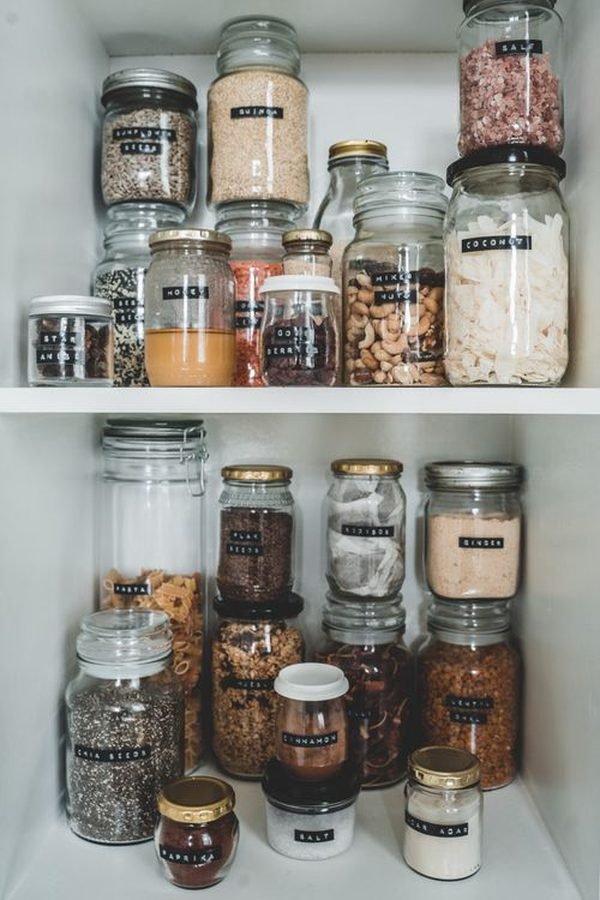
Tip: unify mismatched bins with matching labels. A $2 label maker (or neat handwriting on kraft tags) makes random containers look like a deliberate system.
What Not to Do
- Do not buy storage before decluttering. In a small apartment, every container should have a job waiting for it.
- Do not block natural light. Tall shelving is great — just keep it off the window wall. Light makes small spaces livable.
- Do not store things you cannot reach. If getting something out requires moving three other things, it will never go back. Daily items stay at arm level.
- Do not forget the "one in, one out" rule. Small apartments have a fixed capacity. When something new arrives, something old leaves — that is the whole maintenance system.
Start With the Room That Stresses You Most
You do not need all 28 hacks. Walk through your apartment and notice which room makes you sigh — start there, with two or three hacks from its section. One organized room changes how the whole apartment feels, and momentum does the rest. Renter-friendly storage is not about a perfect system on day one; it is about small, reversible wins that compound into a home that finally has a place for everything.