Small Closet Organization Ideas: Double Your Space for Under $50
Some links in our guides may earn us a commission at no extra cost to you — here's why we only recommend what we'd buy.
Jump to a section
A small closet is not a storage problem — it is a layout problem. Most small closets waste their best asset: vertical space. The air above the top shelf, the gap between hanging clothes and the floor, the deep corners of shelves, and the back of the door are all square footage you already own and are not using. These small closet organization ideas harvest those dead zones with about $50 of simple supplies and one free evening.
Where Closet Space Actually Goes
A standard reach-in closet wastes roughly half of its volume. A single rod leaves a meter of empty air above the top shelf and a knee-high gap under the hanging clothes. Shelves without dividers become avalanches, so people stop using them. The floor becomes a shoe pile because there is nowhere else for shoes to go. None of this is a space shortage — it is four dead zones waiting to be claimed.
Doubling a small closet means harvesting each zone on purpose: a second rod for the air under the first, dividers and bins for the shelf, a defined shoe row for the floor, and hooks or a rack for the door. Measure the closet before anything else — width, depth, and the height from the existing rod to the floor — and write the numbers on your phone. Every purchase in this guide depends on those measurements.
The Under-$50 Closet Toolkit
Everything on this list is available at dollar stores, discount retailers, or the home aisle of a big-box store:
- A second tension rod ($8–$12). The single biggest win in a small closet. It creates a whole second row of hanging space with no drilling and no damage to the walls.
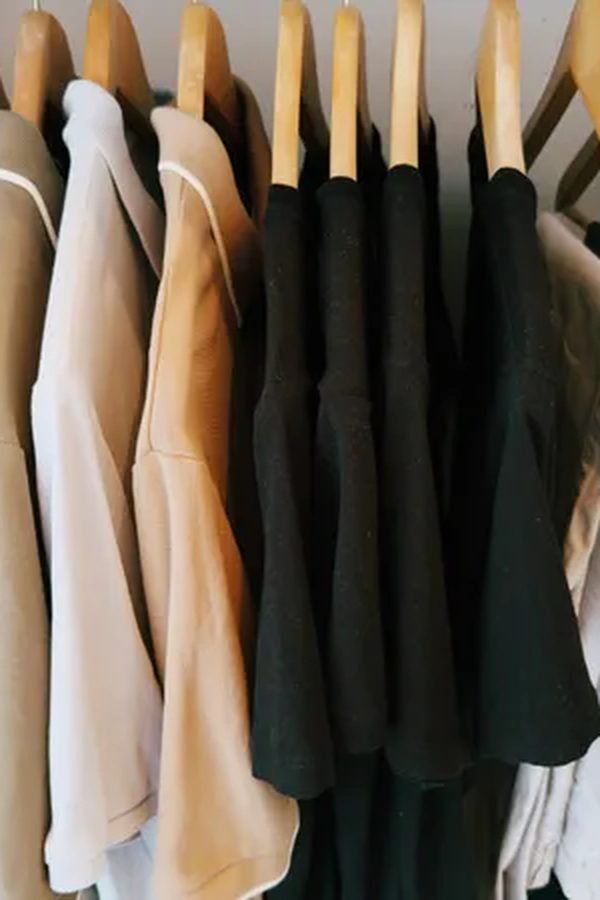
- Slim velvet hangers (pack of 30, ~$12). Thirty slim hangers take roughly the space of twenty bulky plastic ones, and clothes do not slide off them. This alone can free up several inches of rod.
- Shelf dividers (set of 4–6, ~$10). They clip onto the existing shelf and keep folded stacks from toppling sideways — which is the reason most people abandon closet shelves.
- Fabric bins ($1–$3 each). For the shelf: scarves, swimwear, off-season accessories, handbags. One category per bin, labels on the front.
- Over-the-door hooks or a narrow rack ($8–$12). Belts, bags, tomorrow's outfit, robes — the door is a full wall of storage most closets ignore.
- A few adhesive hooks. For necklaces, hats, or a small bag inside a deep corner where nothing else fits.
Skip the bulky plastic hangers, the single-use gadgets, and any "closet system" that costs more than the clothes inside it. The basics above outperform expensive kits in small spaces because they adapt to the closet instead of forcing the closet to adapt to them.
Double Your Hanging Space in One Evening
The second tension rod is the move that changes everything. Here is how to place it: the lower rod should sit about 100 cm (40 inches) below the upper rod if you hang shirts and folded pants on top — that leaves enough clearance for both rows without clothes brushing. Shift long dresses, coats, and jumpsuits to one side of the closet so they hang full-length from the upper rod; everything else double-hangs.
While the rods are being adjusted, do the hanger swap. Replace every bulky hanger with a slim one, and hang everything facing the same direction. It sounds cosmetic, but a closet where every hanger matches looks instantly calmer, and — more practically — it makes it obvious which clothes you actually wear. The ones still facing the wrong way after a month are telling you something.
Tip: if the closet is shared, split it vertically, not by rod. Each person gets a full column — top shelf, double rod, and floor space — instead of one person getting the good rod and the other getting the leftovers.
Fix the Shelf and the Floor
The top shelf. This is where folded jeans, sweaters, and bins for small categories live. Shelf dividers turn it into neat columns that survive daily use. Above folded stacks, nothing — resist the urge to double-stack, because the top layer always becomes a landslide. Bulky or rarely used items (luggage, off-season bins) go to the very back of the shelf, daily items in front.
The floor. Shoes get a single defined row, not a pile. A low two-tier shoe rack costs under $15 and holds a surprising number of pairs in a reach-in closet; in a truly tiny closet, even a tension rod mounted low with shoes hung by their heels works. The space under hanging clothes that is not shoes becomes folded storage: a low dresser, stacked bins, or a small set of drawers for tees, gym clothes, and jeans.
Deep corners. The corners of deep shelves are where things go to be forgotten. Pull-out bins solve this — a bin you can slide out gives you the full depth without the archaeological dig. Adhesive hooks on the side walls hold necklaces, hats, or a belt collection in space that would otherwise sit empty.
Layouts for Awkward Closets
Not every closet is a standard rectangle. A few layouts for the tricky ones:
- Deep single-rod closets. Treat them like a pantry: rows front-to-back, pull-out bins for the back half, daily items in front. Depth is only a problem when it is unmanaged.
- Sliding-door closets. Keep the center clear (that is where you stand) and build zones on each side. Over-the-door storage does not work here, so use the side walls with adhesive hooks instead.
- Closets with no door. A tension rod with a curtain hides the visual clutter for a few dollars and makes an open closet look intentional rather than exposed.
- Reach-ins under stairs or with sloped ceilings. Put the low-clearance area to work: shoe rows, bins, and folded storage go where the ceiling is low; hanging goes where it is tall.
The One-In-One-Out Rule (Keeping It From Filling Up Again)
A small closet refills itself. Every organized closet eventually dies from volume, not from bad systems — so the maintenance rule matters as much as the setup:
- One in, one out. Every new item that enters the closet means one item leaves it — donated, sold, or retired to rag duty. No exceptions is the only version of this rule that works.
- Seasonal swap. Off-season clothes do not live in a small closet. They live in labeled bins under the bed or on a high shelf elsewhere. Swap twice a year and the closet only ever holds what you are actually wearing.
- The twelve-month question. Once a year, ask of each item: have I worn this in the last twelve months? If the honest answer is no, it leaves. Sentimental pieces get one small bin, not half a rod.
- The five-minute weekly reset. Refold what toppled, rehang what slid off, and return the strays. Five minutes a week beats a three-hour reorganization every six months.
Final Thought
Small closet organization is not about buying more storage — it is about using the space you already have twice. Double the rod, slim the hangers, divide the shelf, define the floor, and use the door. One evening, under $50, and the smallest closet in the house finally holds everything it is supposed to.